Guide on Attendance Management Systems in India

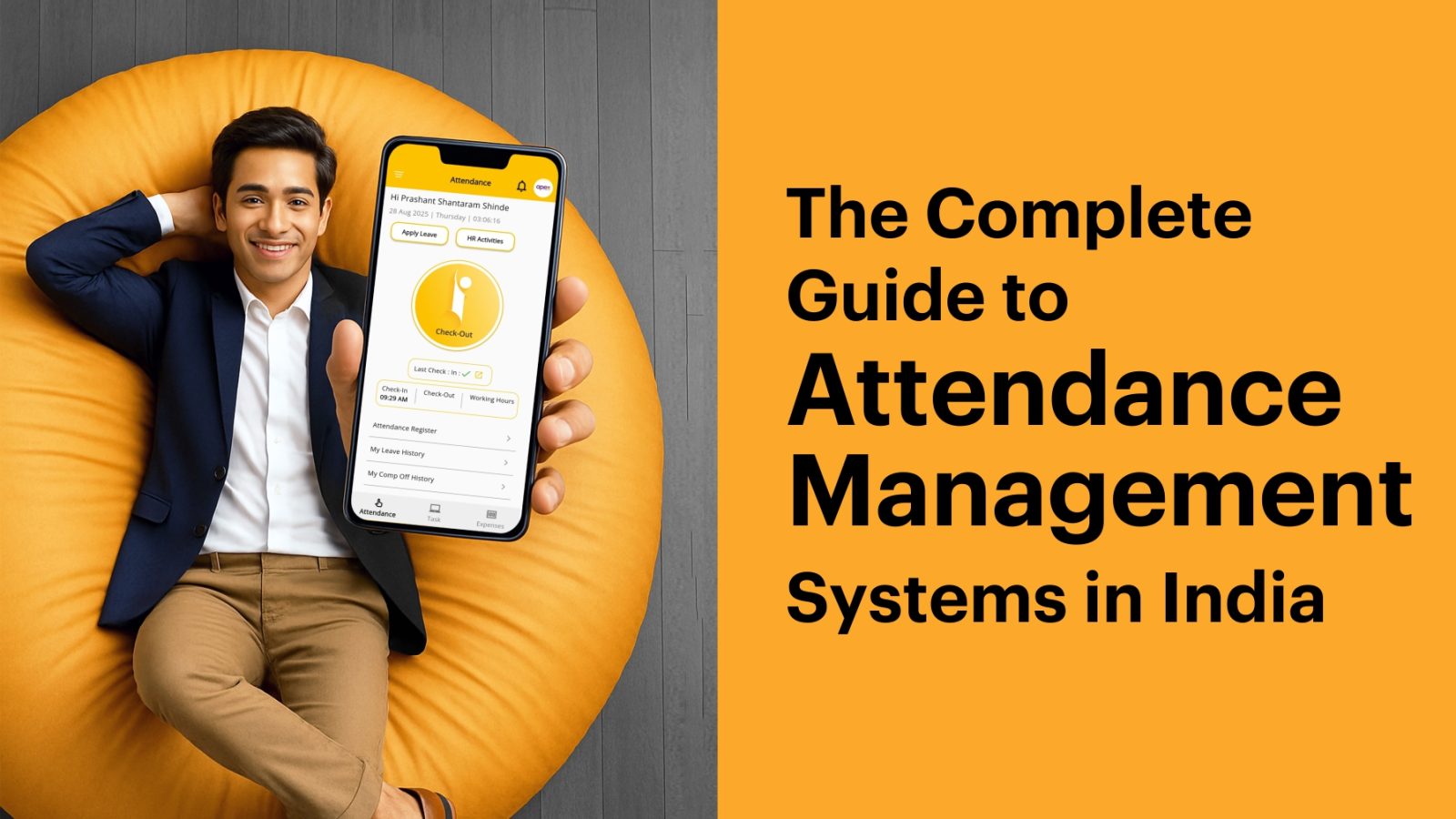
The Complete Guide to Attendance Management Systems in India (2025)

Guide on Attendance Management Systems in India

Table of Contents

The Guide on Attendance Management Systems in India

In India, how you track employee attendance is more than an administrative task, it directly impacts payroll accuracy, statutory compliance, and operational efficiency. Yet, despite the availability of digital tools, many businesses continue to rely on methods that introduce error, delay, and risk.

This guide is for business owners, operations managers, and finance professionals who are evaluating an Attendance Management System (AMS) for the first time or looking to replace an outdated solution. We’ll walk through what an Attendance Management System is, why legacy methods fall short, what features matter in the Indian context, and how to choose a system that aligns with your business model.

The goal is not to sell a product, but to equip you with the knowledge to make a confident, informed decision.

What Is an Attendance Management System?

An Attendance Management System (AMS) is a digital platform designed to automate the recording, verification, and reporting of employee work hours. Unlike standalone time clocks or manual logs, a modern Attendance Management Software operates as part of a broader workforce management ecosystem, integrating with payroll, leave management, and compliance workflows.

At its best, an Attendance Management Software eliminates guesswork, prevents fraud, and provides real-time visibility into workforce availability. It replaces paper-based or error-prone processes with a centralized, auditable, and often mobile-enabled system.

Importantly, an Attendance System is not defined by hardware. While biometric devices were once the default, today’s most flexible systems are software-first, running on employees’ smartphones or web dashboards, with no requirement for fingerprint scanners, kiosks, or dedicated machines.

Why Legacy Attendance Methods Persist and Why They’re Problematic

Across India, three legacy approaches dominate: manual registers, spreadsheets, and biometric machines. Each has surface-level appeal but introduces significant operational friction.

1. Manual Registers and Paper Logs

Paper-based attendance remains common in small businesses due to its zero upfront cost and simplicity. However, it lacks verification, auditability, and scalability.

  • Proxy attendance is common: Without identity verification, colleagues can easily mark attendance for absent peers.

  • Data is static: Corrections are made retroactively, often based on memory or informal agreements.

  • No real-time insight: Managers only discover discrepancies during payroll processing, too late to act.

For businesses that rely on accurate time records for client billing, productivity tracking, or compliance, paper logs are inadequate.

2. Excel or Google Sheets

Spreadsheets offer more structure than paper but introduce new vulnerabilities:

  • Manual data entry remains: Someone must still input every punch, creating bottlenecks.

  • Version control issues: Multiple copies circulate via email or messaging apps, leading to conflicting data.

  • Limited validation: There’s no way to verify that a field employee was actually at a client site when they marked “present.”

  • No real-time tracking: These trackers do not provide instant updates, making it difficult for remote teams or managers to monitor attendance in real time.

  • Lack of advanced features: They lack modern capabilities like GPS-based tracking, automated alerts for lateness, or facial recognition.

  • Difficult to manage: As the company grows, managing and organizing spreadsheets becomes cumbersome, especially with multiple users.

  • Security concerns: Excel and Google Sheets lack the robust security features of dedicated software, making data vulnerable to tampering or loss.

While spreadsheets are free to start, they demand significant time to maintain and errors often go unnoticed until payroll is processed.

3. Standalone Biometric Machines

Biometric systems (fingerprint or facial recognition) reduce buddy punching but come with trade-offs:

  • Inaccuracy: Devices can misread biometrics due to factors like dry skin, scars, cuts, or heavy hand use from labor, leading to a high rate of false rejections.

  • Long queues: In large organizations, long queues can form, causing delays and frustration for employees.

  • Scanner issues: Scanners can malfunction or become less accurate over time without proper maintenance and cleaning.

  • Limited features: Biometric machines often only track attendance and may require extra cost to integrate with other HR management solutions.

  • Hardware dependency: Devices require upfront investment (typically ₹5,000 to ₹20,000 for basic models in the Indian market) and ongoing maintenance.

  • Connectivity problems: Dependence on a network connection means a lack of connectivity can prevent data from being synced, leading to data loss or delays

  • Single point of failure: If the machine malfunctions or the connected computer is offline, attendance data stops being captured.

  • Delayed reporting: Most biometric systems generate reports only at month-end, offering no real-time visibility.

  • Limited flexibility: They cannot accommodate remote or field-based employees without additional infrastructure.

In essence, biometric machines solve one problem (identity verification) while creating others (cost, downtime, rigidity).

What Defines a Modern Attendance Management System for Indian Businesses?

A truly effective Attendance Management System (AMS) in India must account for local operational realities. Global tools often fail because they assume consistent internet, standardized work hours, or integration with enterprise HRIS platforms none of which reflect the typical Indian SME.

The following features are critical for businesses operating in India:

Multi-Modal Attendance Capture

Not all employees work in the same environment. A system that forces every worker into a single method will either exclude some or compromise accuracy. The most adaptable platforms support multiple verification modes:

  • WiFi-based check-in: Employees can only mark attendance when connected to a designated office network and ideal for corporate settings.

  • Geo-fencing: Define a virtual boundary (e.g., 100–200 meters around a factory or store). Attendance is accepted only within this zone.

  • GPS tracking: For field staff, verify location at the time of punch-in/out using smartphone GPS.

  • Face recognition: Use the smartphone camera to confirm identity—no external hardware required.

This flexibility ensures that each employee is tracked using the most appropriate method for their role.

Real-Time Visibility and Mobile Access

One of the biggest limitations of legacy systems is delayed data. A modern Attendance Tracking Software should provide real-time dashboards accessible via mobile or web, allowing managers to:

  • See who is present or absent at any moment

  • Receive alerts for late arrivals or missed punches

  • Approve correction requests instantly

This immediacy transforms attendance from a retrospective record into a proactive management tool.

Integration with TallyPrime

For millions of Indian small and medium businesses, TallyPrime is the core accounting platform. An Attendance Management System that does not integrate with Tally creates redundant work: attendance data must be manually exported, reformatted, and re-entered into payroll.

Direct integration eliminates this friction, enabling:

  • Automatic calculation of salary based on actual attendance

  • Accurate computation of statutory contributions (PF, ESI, Professional Tax)

  • One-click posting of payroll entries to the ledger

Without this link, the benefits of digital attendance are significantly diluted.

Compliance with Indian Labor Regulations

India’s labor laws are complex and vary by state. While the new Indian Labour Codes 2020 aim to simplify regulations, implementation remains staggered, and businesses must still comply with existing rules under the Shops and Establishments Acts, Factories Act, and state-specific notifications.

A robust Attendance Management System should support:

  • Customizable attendance policies (e.g., late thresholds, break times)

  • Automatic calculation of overtime based on state rules

  • Leave management aligned with company policy and legal requirements

While no software can guarantee full compliance, a well-designed system reduces the risk of errors that could trigger penalties during audits.

Transparent, Usage-Based Pricing

Many vendors structure pricing around fixed user tiers (e.g., “₹4,000/month for up to 50 users”). This forces businesses to pay for capacity they don’t use, a particular burden for startups or seasonal operations.

Per-user, annual pricing aligns cost with actual usage and allows for seamless scaling. It also provides predictable budgeting, with no surprise fees for onboarding or support.

How to Implement an Attendance Management System Successfully

Deploying a new Attendance Software doesn’t have to be disruptive. A phased, thoughtful approach ensures adoption and minimizes resistance.

Step 1: Audit Your Current Process

Before selecting a system, understand your pain points:

  • How many hours per week are spent on attendance reconciliation?

  • What are the most common errors (e.g., proxy marking, missed punches, leave mismatches)?

  • Who is responsible for managing attendance data?

This clarity will help you prioritize features that solve real problems.

Step 2: Map Employee Roles to Attendance Methods

Categorize your workforce:

  • Office staff → WiFi, geo-fencing or face recognition

  • Field employees → GPS (Geo Location)

  • Workshop labor → Face recognition (via shared device)

Assign the right method to each group to balance security and usability.

Step 3: Run a Pilot

Test the system with one department for 2–3 weeks. Measure:

  • Employee adoption rate

  • Reduction in manual corrections

  • Time saved on payroll processing

Use this feedback to refine your rollout plan.

Step 4: Train and Communicate

Host a brief session to show employees how to:

  • Download and log in to the app

  • Mark attendance correctly

  • Submit leave or correction requests

Most resistance stems from uncertainty, not opposition to technology.

Step 5. Integrate with Payroll Early

If you use an accounting software (For eg. TallyPrime) ensure the integration is active before full deployment. This closes the loop between attendance and salary, preventing reconciliation work.

On Choosing the Right Solution: A Practical Framework

When evaluating vendors, consider the following:

  • Hardware requirement: Does the system require biometric devices, or can it run on smartphones?

  • Pricing model: Is it per-user and scalable, or locked into fixed tiers?

  • Payroll integration: Is it native, or does it require manual exports?

  • Support and onboarding: Is setup assistance included? Is support available during business hours?

The best system isn’t the one with the most features, it’s the one that solves your specific problems with the least friction.

For businesses currently using registers, spreadsheets, or standalone biometric machines, the priority should be real-time visibility, zero hardware dependency, and seamless payroll integration.

A Note on iPresent: Designed for the Indian SME Reality

Among the growing number of attendance solutions, few are built specifically for the constraints and opportunities of Indian small and medium businesses.

iPresent is a mobile-first attendance management system that eliminates hardware dependency, integrates directly with TallyPrime, and uses per-user annual pricing, making it accessible to teams of any size.

Key differentiators include:

  • No biometric machines required: Employees use their own smartphones.

  • Four verification methods: WiFi, geo-fencing, GPS, and face recognition, assignable per role.

  • TallyPrime integration: Attendance data syncs automatically for salary calculation, PF/ESI, and tax compliance.

  • Transparent pricing: Starting at ₹270 per employee per year, plus ₹3,600 per admin user annually, no hidden tiers.

For businesses using registers, Excel, or standalone biometric devices, iPresent Attendance Management System offers a path to real-time visibility, reduced payroll errors, ensure compliance and month-end peace of mind without infrastructure investment.

A free ROI calculator is available to estimate your potential savings based on team size, current method, and average salary structure.

Final Thoughts

Digital transformation in attendance management isn’t about replacing paper with pixels. It’s about gaining control over a critical operational process that affects payroll, compliance, and productivity.

The right Attendance Management System for your business will reflect how your team actually works and not how a vendor assumes they should. By focusing on flexibility, integration, and real-world usability, you can move from monthly firefighting to daily clarity.

See iPresent Attendance Management System in Action 

FAQs

What is an attendance management system?

An attendance management system is a digital solution that automates and centralizes the process of tracking employee time, absences, and leave requests. It replaces manual methods like paper logs with digital tools such as biometric scanners, mobile apps, or card swipes to accurately record work hours using modern technologies such as WiFi, GPS, or face recognition, and syncing it with payroll, leave which helps to improve efficiency, and ensure compliance with labor laws. The goal is to reduce errors, prevent fraud, and provide real-time visibility into workforce presence without requiring constant manual oversight.

Why do Indian businesses still use manual registers or Excel sheets for attendance?

Many small businesses continue using manual registers or Excel because they are familiar, require no upfront investment, and seem simple to operate. However, these methods are prone to human error, proxy attendance, version conflicts, and delays in reporting. They also create significant administrative burden  often requiring 5–10 hours per month from owners or accountants to reconcile data before payroll. While low-cost to start, they become costly over time due to inefficiency and compliance risk.

Are biometric machines still a good choice for small businesses in India?

Biometric machines can help prevent buddy punching, but they come with practical limitations. They require hardware investment (₹5,000–₹20,000), depend on stable power and internet connectivity, and often only generate reports at month-end, meaning issues go unnoticed until payroll is processed. For businesses with remote or field staff, biometric devices are often unusable. While still in use, they are increasingly being replaced by mobile-first systems that offer similar accuracy without the infrastructure cost or downtime risk.

Can an Attendance Management System integrate with TallyPrime?

Yes, and for most Indian SMEs, this is essential. TallyPrime is used by millions of businesses for accounting and payroll. A modern Attendance Management System should integrate directly with Tally to auto-sync attendance data, calculate salaries, apply statutory deductions (PF, ESI, Professional Tax), and generate ledger entries. Without this integration, you’re still manually transferring data, defeating the purpose of digitization and increasing the risk of payroll errors.

What should I look for when choosing an Attendance Management System?

Focus on these 4 criteria:

  1. No hardware dependency – Can it work on smartphones?
  2. Multiple attendance methods – Does it support WiFi, geo-fencing, GPS, and face recognition? This is so that no matter where your staff is working be it office, on field or from home, they are covered.
  3. Accounting Software integration – Can it auto-sync with your accounting software?
  4. Per-user pricing – Are you paying for what you use, or forced into fixed user tiers?
Best Time and Attendance software for Small Businesses

8 Best Time And Attendance Software for Small Businesses in India 2025

Best Time and Attendance software for Small Businesses

Table of Contents

Best Time and Attendance Software for Small Businesses in India

If you run a small business in India, whether it’s a startup, retail store, consultancy, or field service team, you know this truth: time is money, and inaccurate attendance tracking is silently eating your profits.

Manual registers, Excel sheets, or outdated biometric machines lead to:

  • Payroll errors (overtime miscalculations, leave mismatches)
  • Buddy punching and proxy attendance
  • Wasted HR hours on corrections
  • Compliance risks during audits

The right time and attendance software for small businesses solve all this—automatically, affordably, and without complex setups.

But not all systems are built for small teams. Many force you into:

  • 50-user minimums (when you only have 15 employees)
  • Biometric hardware (₹10,000+ upfront)
  • Enterprise pricing (₹5,000+/month for basic features)

After testing 20+ platforms with real small business owners (5–100 employees), we’ve ranked the top 8 time and attendance software solutions that actually work for Indian SMBs, prioritizing cost, simplicity, mobile access, and scalability.

1. iPresent – Best Overall for Small Businesses

Ideal for: Small businesses, startups, shops, field teams, cost-conscious founders and any organization that wants to digitize their attendance system.
Pricing: ₹270/user/year (billed annually)

iPresent Time And Attendance software is the most affordable and flexible time and attendance software for small businesses in India. It runs entirely on smartphones, no biometric devices, no kiosks and no wiring needed.

Why It’s Perfect for Small Teams:

  • True per-user pricing: where you pay only for active employees (no 25/50-user traps)
  • Seamless TallyPrime integration: that enables auto-sync attendance, payroll, and PF/ESI reports
  • Multiple attendance methods: WiFi (office), Geo-fencing (warehouse), GPS (remote), Face Recognition (high-security zones or warehouses)
  • Fast Set up: Set up in under 60 minutes, no IT team needed.

Best if: You want zero hardware, predictable pricing, and seamless Tally payroll.

👉 Get 9-day Free Trial

2. Zoho People – Best for Remote & Tech-Savvy Teams

Ideal for: Fully remote startups, IT teams, Zoho ecosystem users
Pricing: ₹99/user/month (~₹1,188/user/year) | Free for ≤5 users
Zoho People offers a clean, cloud-based attendance tracker with strong leave and shift management.

Pros:

  • Intuitive interface, great mobile app
  • Free plan for micro-businesses
  • Integrates with Zoho Payroll & Books

Cons:

  • No Tally integration
  • Fixed monthly billing (no annual discount)
  • Limited for field or workshop teams

Best if: Your team is fully remote and already uses Zoho apps.

3. Keka HR– Best All-in-One HR Suite

Ideal for: Small offices wanting HR + payroll + attendance in one place
Pricing: ₹3,499/month for up to 25 users (~₹140/user/year)

Keka HR bundles attendance with performance reviews, payroll, and engagement tools.

Pros:

  • Unified HR dashboard
  • Good shift & overtime tracking
  • Responsive customer support

Cons:

  • Pay for 25 users even if you have 10
  • No Tally or offline support
  • Overkill for pure attendance needs

Best if: You want an all-in-one HR platform and don’t use Tally.

4. sumHR – Best for WhatsApp & Biometric Hybrid

Ideal for: Small factories, retail chains, teams with basic phones
Pricing: ₹2,499/month for 50 users

sumHR allows attendance via WhatsApp—ideal for staff without smartphones.

Pros:

  • Unique WhatsApp punch-in
  • Biometric + mobile support
  • Simple, fast onboarding

Cons:

  • Fixed user plans
  • No Tally integration
  • Web app can lag

Best if: You need low-tech attendance options for non-smartphone users.

5. Pocket HRMS – Best for Workshops & Retail

Ideal for: Small manufacturing units, service centers, multi-location stores
Pricing: ₹2,999/month for 50 users
Supports kiosk, facial recognition, and GPS—ideal for mixed environments.

Pros:

  • Multiple attendance modes
  • Built-in PF/ESI compliance
  • Good for industrial settings

Cons:

  • Hardware adds cost
  • No per-user pricing
  • Steeper learning curve

Best if: You run a small workshop and can invest in a kiosk.

6. greytHR – Best for Compliance-First SMBs

Ideal for: Businesses in regulated sectors (20–100 employees)
Pricing: Custom (starts ~₹4,000/month)
Hardware Required: Optional

Known for bulletproof statutory compliance (PF, ESI, PT, LWF).

Pros:

  • Audit-ready payroll reports
  • Microsoft-certified security
  • Reliable multi-location tracking

Cons:

  • Not cost-effective under 20 employees
  • Setup takes 3–5 days
  • No per-user model

Best if: Compliance is your #1 priority and you have 30+ staff.

7. HROne – Best for Multi-Location Teams (50+)

Ideal for: Growing SMBs with offices in 2+ cities
Pricing: Starts at 50 employees (~₹5,000+/month)
Strong geo-tracking and shift management for distributed teams.

Cons:

  • Not ideal for small teams (<30 employees)
  • Expensive entry point
  • Complex for non-HR users

Best if: You’re scaling fast and need enterprise-grade features.

8. Zimyo – Best for Employee Engagement

Ideal for: Culture-focused small businesses
Pricing: ₹3,999/month for 50 users
Blends attendance with rewards, surveys, and recognition.

Pros:

  • Engaging UI
  • Good leave management
  • Biometric compatible

Cons:

  • Fixed pricing
  • No Tally/Zoho Books integration
  • Mobile app lacks depth

Best if: Team morale and engagement matter as much as attendance.

Final Verdict

The best time and attendance software for small businesses isn’t the one with the most features; it’s the one that saves you money, scales with you, and disappears into your workflow.

For 90% of Indian small businesses, that’s iPresent:

  • No hardware → Save ~₹10,000+ upfront
  • Per-user pricing → Pay only for who you use
  • Tally integration → Automate payroll in minutes
  • Mobile-first → Works for office, remote, and field staff

Most small businesses lose ₹12,000–₹45,000/year due to attendance errors, manual payroll, and hardware costs.


Use our free ROI Calculator to see how much you’ll save in Year 1 with iPresent Attendance Software based on your team size, salary, and current method (register, Excel, or biometric).

Calculate My Savings in 30 Seconds →

See iPresent Time and Attendance software in Action 

FAQs - Time And Attendance Software

What is the best time and attendance software for small business in India?

iPresent Time and Attendance software is the top choice for most small businesses because it requires no hardware, charges per user (not per slot), and integrates with TallyPrime for automated payroll and compliance.

Can I use attendance software without buying biometric machines?

Yes. Systems like iPresent, Zoho People, and Keka HR use smartphone-based tracking (GPS, Geo Fencing, WiFi and face recognition) — no extra hardware needed.

How much should a small business spend on attendance software?

Most small businesses in India should spend between ₹200–₹600 per employee per year on attendance software. Avoid systems that charge monthly for fixed user blocks (e.g., “₹900/month for 25 users”)—they cost 3–5x more long-term.

Can I track attendance without biometric machines or hardware?

By using smartphone-based verification methods like GPS, geo-fencing, WiFi, or face recognition — assigned based on your workplace needs. This reduces proxy marking and location fraud.

How accurate is mobile-based attendance compared to biometric machines?

Modern mobile-based attendance can be more accurate and fraud-resistant than basic biometric machines. While fingerprint devices can be tricked with fake prints or fail in dusty/wet environments, smartphone-based systems offer multiple methods:

  • GPS Based attendance
  • geo-fencing 
  • Face recognition 
  • WiFi-based  

    These methods ensure that there’s no “buddy punching”. Mobile attendance offers better accuracy at 1/10th the cost.
Can I switch from Excel or registers to digital attendance easily?

Yes—and it’s one of the highest-ROI moves a small business can make. Start by:

  • Running a 2-week pilot with one team
  • Using historical data to estimate manday loss (typically 0.5–1% of total working days)
  • Calculating savings from reduced payroll errors and HR time
    Most SMEs see full ROI in 1–3 months. Tools like iPresent even offer free onboarding help to migrate your employee list from Excel—no technical skills required.
top 10 best attendance management system in India 2025

Top 10 Best Attendance Management System in India (2025)

top 10 best attendance management system in India 2025

Table of Contents

Top 10 Attendance Management System in India

In today’s dynamic work environment—spanning offices, remote setups, field operations, and hybrid models—manual attendance tracking is no longer just inefficient; it’s a financial and compliance risk. Indian businesses lose thousands annually due to payroll errors, time theft, and labor law non-compliance.

That’s why over 85% of growing Indian companies now rely on digital attendance management systems—not just to log clock-ins, but to automate payroll, ensure statutory compliance, and gain real-time workforce visibility.

After evaluating 40+ platforms across accuracy, scalability, mobile experience, pricing transparency, and integration with Indian accounting tools, we’ve curated the definitive list of the Top 10 Best Attendance Management Systems in India in 2024.

Our ranking prioritizes:

  • Zero hardware dependency (mobile-first solutions)
  • Fair, scalable pricing (no forced user slots)
  • Seamless Tally or payroll integration
  • Real-world usability for Indian SMEs, startups, and enterprises 


1. iPresent Attendance Management System

iPresent is one of the most intuitive and efficient attendance management systems in India. It helps businesses track employee attendance accurately through GPS, Wi-Fi, and Geo-Fencing-based attendance without the need for any biometric devices.

iPresent simplifies workforce tracking by recording check-ins/check-outs, managing shifts, calculating overtime, and tracking break durations — all from a single dashboard. With its smart automation and real-time sync, managers can view attendance insights instantly, identify late arrivals, and optimize shift scheduling.

Features

GPS & Geo-Fencing Based Attendance
Allow employees to mark attendance from assigned locations using mobile devices. Track on-field staff in real time with complete location visibility.

Wi-Fi-Based Attendance
Enable attendance only from approved office networks to maintain accuracy and prevent proxy marking.

Shift & Roster Management
Easily configure fixed or flexible shifts, manage rotating rosters, and track offline activities like lunch or tea breaks.

Multi Check-In/Check-Out Support
Record multiple check-ins and check-outs in a day for employees with split shifts or outdoor work requirements.

Attendance Policy Configuration
Set up policies for late coming, early leaving, overtime, and comp-offs based on organizational needs.

Comprehensive Reporting
Generate reports including attendance register, late coming/early leaving, muster rolls, overtime, and leave balance reports.

Payroll Integration
Seamlessly export attendance data to Tally Integrated Payroll for automated salary processing and statutory compliance (PF, ESI, PT, IT).

Employee Self-Service (ESS)
Employees can view their attendance summary, request corrections, and access attendance history through the mobile app.

Why Choose iPresent?

  • Real-time attendance tracking without hardware or biometric dependency.
  • Fully cloud-based SaaS system accessible from anywhere.
  • Flexible shift management with detailed reporting and analytics.
  • Smooth payroll integration via Tally or Excel export.
  • Cost-effective, easy to deploy, and built for scalability.

Best Suited For

Organizations of all sizes across industries such as Manufacturing, Retail, Construction, Education, IT, Healthcare, and more.

Pricing

iPresent offers simple per-user pricing — pay only for what you use.

  • Mobile App Users: ₹270/user/year
  • Web Users: ₹1,800/user/year

No hardware, setup, or hidden costs.

Get Your Free Demo


2. HROne

HROne is a great attendance management system for most companies, be it small-sized, medium, or large-scale enterprises. Major features include GPS tracking, geo attendance, automatic calculation of paydays, and more to streamline attendance—mark and approve from 5+ methods (mobile, WhatsApp, or desktop). With it, you can check in/check out, do leave management, handle shifts, and more. It’s easy to use, reduces errors in records, and offers accessibility to anyone and everyone.

Features

  • Capture a live photo to verify remote user presence instantly.
  • Record attendance solely within predefined geo‑fenced event or meeting zones.
  • Enable attendance marking from remote, home, or client locations seamlessly.
  • Automatically update employee shifts weekly or monthly based on configuration.

Pros

  • The interface is easy to use and requires minimal training.
  • It covers core HR functions, for example, payroll and leave management.
  • It is cloud-based software that can be accessed from anywhere.
  • The software automates HR-related administrative tasks and helps reduce compliance risks.
  • The system is effective for its multi-location attendance tracking and integration with biometric devices.

Cons

  • Some startups might find this software expensive, as the pricing models start from 50 employees.
  • Some users have experienced technical issues and system slowdowns.

Best Suited for

Mid-sized to larger businesses.


3. Zoho People

Zoho People provides employee attendance tracker management software. They guarantee that this single app can handle all your attendance management needs. Zoho People offers greater flexibility and functionality in its online attendance software. You can install, customize, and tailor the software to suit your company’s preferences.

Features

  • Real-time attendance
  • Access attendance data
  • Track attendance
  • Helps in payroll processing

Pros

  • Its system is user-friendly and has an intuitive interface along with a mobile app.
  • Managers can customize workflows and simplify routine HR-related tasks.
  • It is a cost-effective option for small and medium-sized businesses.
  • The software has reporting and analytics features that help HR make decisions.
  • Some of the core features of this system are employee self-service and a leave management system.

Cons

  • The software’s reporting capabilities and analytics could be more detailed.
  • The mobile app has some issues when compared to the web version.

Best Suited for

Small to mid-sized businesses.


4. Workstatus

Workstatus emerges as an industry-leading Attendance Management System (AMS) that transcends conventional boundaries, offering a comprehensive suite of features designed to redefine how organizations track, manage, and optimize their workforce. As a versatile Attendance Management Solution, Workstatus caters to the distinctive needs of various industries, providing specialized features and tools to enhance efficiency and transparency.

Features

  • Time and Attendance
  • Payroll Integration
  • GPS Tracking
  • Selfie-Based Attendance
  • Shift management
  • Leave & Overtime Management

Pros

  • It helps reduce payroll-related errors due to accurate and automated time-tracking.
  • In project management, managers can assign work to employees and track progress.
  • It provides real-time location tracking and geo-fencing.
  • It has a user-friendly dashboard and mobile app.
  • It is a good option for both in-office and remote employees.

Cons

  • The software might have some privacy concerns due to activity tracking.
  • The internet connection needs to be strong for live location and geo-fencing features.

Best Suited for

Medium to large-sized organizations.

5. Keka HR

Keka says theirs is the only cloud software you will ever need. They also claim that it is the only attendance management software in India that integrates every aspect of time tracking right from capturing time anywhere, scheduling shifts, and tracking overtime, and is fully integrated with payroll. They ensure that time tracking doesn’t feel like micromanaging as they gamify the time tracking and give an easy-on-the-eye interface for employees to be in charge of their own time.

Features

  • Employee database
  • Attendance & Leave Management
  • Payroll Management
  • Analytics & Reporting
  • Mobile App

Pros

  • Its dashboard offers detailed HR metrics for performance tracking and documentation.
  • Its user-friendly interface makes it easy to manage attendance and leave.
  • The software easily integrates with other tools, making HR processes smoother and more efficient.
  • Their support team is responsive and quick to resolve issues.

Cons

  • The mobile app needs to be more responsive when compared to the web version.
  • Location detection for attendance punching could be improved for better speed and accuracy.

Best Suited for

Small and medium-sized businesses (SMBs).

6. greytHR

For attendance management, greytHR insists that “real-time is the real deal”. Without this, work becomes challenging and full of compromises. Real-time automation of attendance improves productivity. You do not have to choose among attendance marking methods. With greytHR, you can gather real-time attendance from multiple devices using multiple mechanisms across your multiple work locations.

Features

  • Multi-level Approval Hierarchy
  • Real-Time Visibility
  • Extensive Report Generation
  • Mobile App
  • Manage Any Type of Shift
  • Geo Attendance Tracking
  • Integration with Payroll
  • Microsoft Certified Product

Pros

  • The software’s UI is simple and intuitive, which makes it easy for HR professionals to navigate the system.
  • Its payroll software has built-in tax-related calculations and helps maintain compliance with labor laws.
  • An employee self-service (ESS) portal helps employees to manage their information without needing HR’s help and saves time for other strategic tasks.
  • The software is cloud-based, which allows employees to access data through the dashboard from anywhere.

Cons

  • Some users face issues in attendance management and require manual regularization/emails to HR teams.
  • Customization for attendance and leave modules is limited.

Best Suited for

Small to Medium Businesses (SMBs).

7. Zimyo

With their software, Zimyo says, “Time & Attendance Management Made Simple.” You can capture employees’ real-time attendance to improve productivity. You can create attendance policies within the software and enhance workforce management by 80%. You can empower managers with detailed data on employee leaves and attendance information. You can also generate personalized reports in just a few seconds to know every aspect of your employees’ time and attendance.

Features

  • Centralized database
  • Leave & Attendance Management
  • Payroll processing
  • Customizable approval levels

Pros

  • It has a user-friendly interface with easy-to-use HR modules.
  • It has effective employee engagement tools, including surveys and reward programs.
  • Comprehensive payroll management ensures accuracy and compliance.
  • The leave and attendance module includes advanced features like biometric integration and flexible policies.

Cons

  • The platform provides limited flexibility in customizing features and workflows to meet specific organizational requirements.
  • The mobile application sometimes experiences slower response times and lacks functionalities available in the desktop version.

Best Suited for

Medium and large businesses.

8. sumHR

sumHR is another HRMS aiming to help small businesses and startups streamline their HR and payroll procedures. They are one of the best biometric software in India to track attendance and manage absence & leaves, along with integration into the payroll process. They have an app where your employees can manage their attendance and other HRM processes.

Features

  • Capture attendance from WhatsApp
  • Real-time attendance
  • Customizable attendance policies
  • Geo-fence / Geo-Based tracking
  • Automated system for attendance

Pros

  • The software is easy to understand with an intuitive interface, which helps businesses simplify their workflows.
  • HR management features include attendance and leave management, along with payroll processing.
  • The payroll module can be integrated with the attendance and leave management modules for data accuracy.
  • Employees’ data is stored in a cloud-based software, which promotes paperless HR processes.
  • Their customer support is quick and avoids delays/confusion.

Cons

  • Some steps/functions in payroll processing are complex and lead to confusion.
  • The software’s response time and loading speed have issues on web pages.

Best Suited for

Small to midsize companies.

9. Pocket HRMS

Pocket HRMS wants you to experience a cloud-based attendance management system in India. They provide hybrid attendance marking options like manual, app-based, kiosk-based, facial recognition, and geo-location for enhanced flexibility. You can integrate your existing biometric hardware or use your employees’ smartphones to record accurate attendance. They promise flexible software that adapts to your company’s needs.

Features

  • Record working hours
  • Legal Compliance
  • Reports

Pros

  • It is a cost-effective option for companies with industrial needs.
  • It comes with a mobile app and GPS tracking for recording accurate punches in/out of employees.
  • The payroll module includes built-in features related to tax calculations, and the updates are regular to avoid non-compliance.
  • Its ESS portal helps employees manage their information and helps save HR teams time.

Cons

  • There are issues with punch-in and punch-out, along with location tracking.
  • Manual work is required in some payroll processes.

Best Suited for

Small to medium-sized businesses.


10. Darwinbox

This software improves employee attendance and work efficiency by simplifying tracking. It enhances accuracy in resource use, combines schedules and access, and offers insights for HR and payroll. With customization, it centralizes attendance data, allowing HR and managers to focus on essential business tasks.

Features

  • Shift management
  • Track Time
  • Leave
  • Overtime Calculation
  • Reports
  • Employee / Department shift calendar

Pros

  • The system covers the entire employee lifecycle, starting from recruitment to offboarding.
  • Repetitive HR tasks can be simplified and managed easily, which helps HR professionals save time.
  • The system can integrate employee data into a single platform for easy access.
  • The dashboard provides real-time data to help managers and HR professionals make accurate decisions.

Cons

  • The initial setup might take time, and employees are required to take training sessions.
  • It can be an expensive option for some companies.

Best Suited for

Mid to large-sized businesses.


Why Indian Businesses Are Switching to iPresent

Forget hardware. Forget rigid pricing. iPresent is built for India’s mobile-first, cost-conscious, and fast-growing businesses.

Most attendance systems lock you into outdated models:

  • Biometric machines (₹15,000–₹50,000 per device)
  • Fixed user plans (pay for 50 users even if you only have 20)
  • Complex setups that don’t scale with your team

iPresent flips the script.

It’s a purely mobile-based system — employees mark attendance using their smartphones. No extra devices. No wiring. No maintenance. Just a simple app download, and you’re ready to track attendance from day one.

And here’s what truly sets it apart:

Per-User Pricing — Pay Only for Who You Use

Unlike competitors that charge for fixed “slots,” iPresent bills annually per active user.
This means:

  • Startups can begin with 5 users → pay just ₹270/user/year
  • Scale to 100? Pay only for those 100
  • No unused licenses. No wasted spend. True scalability.

Example: A 30-person team pays just ₹8,100/year for full attendance tracking — a fraction of legacy system costs.

Real Integration Power: TallyPrime for Smart Payroll

iPresent goes beyond attendance — it connects directly with TallyPrime, India’s most trusted accounting platform for SMEs. This integration transforms how you manage payroll:

 Automated Payroll Workflow

  • Attendance data flows into TallyPrime → auto-calculates salary
  • Eliminates manual Excel sheets, copy-paste errors, and reconciliation delays

 Flexible Employee Grouping
Group your workforce by:

  • Department (Sales, HR, Operations)
  • Location (Mumbai, Chennai, Remote)
  • Designation (Manager, Executive, Intern)
    Apply custom salary structures and attendance rules at the group level.

 Statutory Compliance, Simplified
TallyPrime uses iPresent’s attendance data to generate accurate reports for:

  • Provident Fund (PF)
  • Employee State Insurance (ESI)
  • Professional Tax (state-wise)
  • Income Tax (TDS)
  • Gratuity accruals

No more chasing attendance logs. No more last-minute payroll panic. Everything syncs automatically.

Note: TallyPrime integration is available as a simple add-on for ₹3,600/year — transparent, predictable, and built for Indian compliance.

How to Implement an Attendance System in 5 Steps

  1. Audit Your Team Structure
    Identify who works from the office, remotely, or in the field. iPresent supports all — with no hardware.
  2. Define Your Payroll Process
    If you use TallyPrime, plan to integrate iPresent to automate salary processing and compliance.
  3. Choose Your Access Setup
    Managers use the web dashboard. Employees use the mobile app. That’s it — no extra tools needed.
  4. Run a 2-Week Pilot
    Test with one team. Measure improvements in payroll accuracy, HR workload, and reporting speed.
  5. Go Live & Scale
    Roll out company-wide. Add or remove users anytime — your cost adjusts automatically.

💡 Pro Tip: Avoid systems that charge for unused user slots or hide Tally integration behind enterprise plans. iPresent keeps pricing simple and fair.

FAQs - Attendance Management System

Which attendance system is best for small businesses in India?

An Attendance Management Software is a digital solution that automates how businesses track employee work hours, shifts, leaves, and presence. It replaces manual registers or biometric machines with real-time, reliable tracking.

Can I use iPresent without buying biometric machines?

Yes. iPresent is 100% mobile-first. Employees use their smartphones to mark attendance — no extra devices required.

How does iPresent ensure accurate attendance?

The best attendance management software depends on your business needs, but many companies prefer solutions that are easy to deploy, that requires no hardware setup, and integrate seamlessly with Tally for payroll purpose like iPresent.

How does iPresent ensure accurate attendance?

By using smartphone-based verification methods like GPS, geo-fencing, WiFi, or face recognition — assigned based on your workplace needs. This reduces proxy marking and location fraud.

Is Tally integration included in the base price?

No — it’s available as a dedicated add-on for ₹3,600/year. Given the time and error savings in payroll, most customers find it essential.